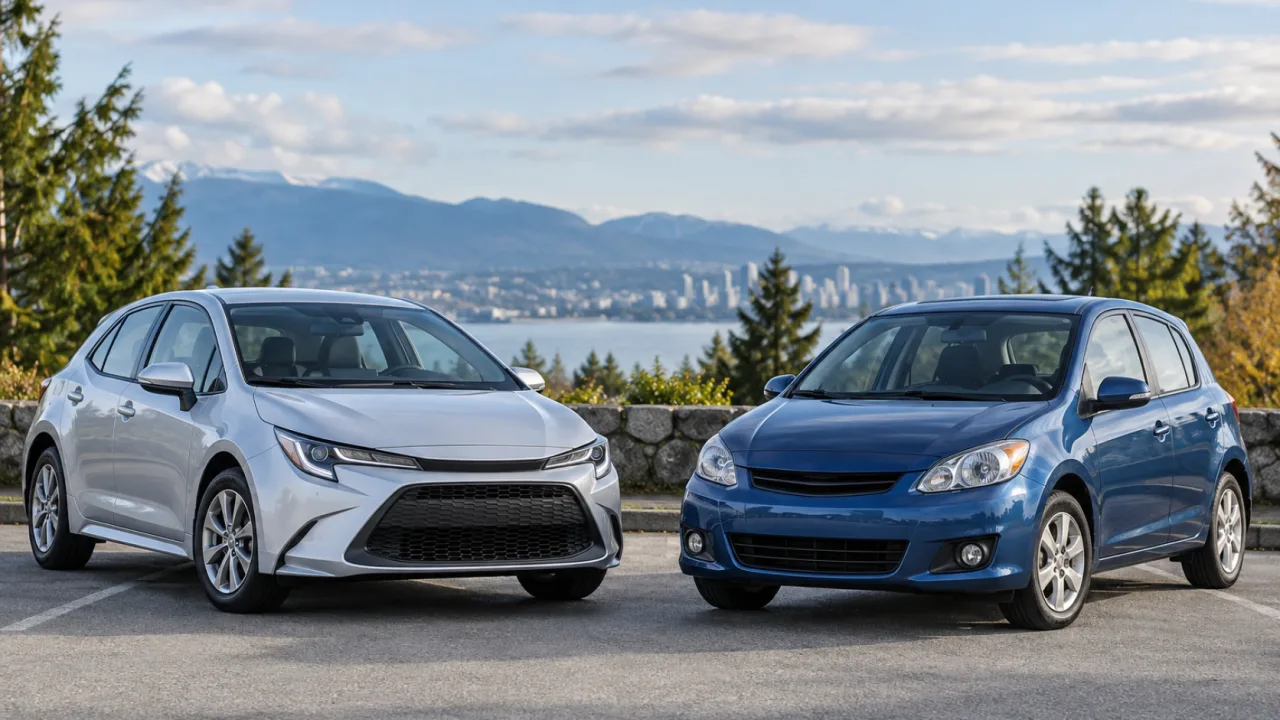
Used cars often cost less upfront and may avoid the steepest early depreciation. New cars may offer lower initial repair risk, newer technology, and stronger warranty coverage. Neither choice is automatically better for every buyer.
The useful question is not simply, “Should I buy a used car or new car?” It is, “Which specific vehicle can meet my needs at a total cost I can comfortably manage?” Two cars with similar monthly payments can have very different financing commitments, repair exposure, and eventual resale value.
This used car vs new car comparison focuses on the whole ownership period. Start with realistic vehicles, obtain actual quotes, and leave room for uncertainty rather than assuming the cheapest advertised option will be the cheapest to own.
Compare the purchase price of suitable vehicles
New vehicles generally have higher purchase prices than comparable used versions. Buying used may let you borrow less, pay cash, or obtain a higher trim level within the same budget. However, an older luxury model may bring maintenance demands that an inexpensive newer car does not.
Compare vehicles that meet the same basic needs: passenger space, cargo capacity, driving conditions, and expected use. A larger or more powerful used car is not necessarily a cheaper substitute once you include fuel, tires, and insurance.
Ask for an itemized purchase price and identify immediate work before deciding what is affordable. Money saved at purchase is useful only if enough remains to keep the vehicle operational.
Understand depreciation without relying on a fixed percentage
Depreciation is the difference between what you pay for a vehicle and what it is worth later. New vehicles typically lose value as they enter used ownership, while an older car may already have absorbed more of that early decline.
That does not mean all used cars depreciate slowly or that every new car follows the same pattern. Model demand, supply, mileage, condition, and changing buyer preferences influence resale. A used car bought at an unusually high price can still lose substantial value.
Estimate resale conservatively for the time you expect to sell. Keeping a vehicle longer spreads the initial purchase over more years, but maintenance and repair needs may also change. Do not treat depreciation as a separate expense if your calculation already subtracts resale value from purchase price.
Compare financing terms and the amount borrowed
Financing can differ for new vehicles, manufacturer-certified used vehicles, and older used cars. New cars sometimes qualify for promotional financing; eligibility and the available vehicle matter. A promotion may also involve choosing between a discount and a financing offer.
A used vehicle may require less borrowing even if its loan terms are less favorable. Compare the amount financed, interest or APR as disclosed, term, fees, total repayment, and any final payment. Obtain written quotes rather than assuming your credit or an advertisement guarantees approval.
A lower monthly payment is not necessarily a lower total cost. Extending repayment can improve monthly cash flow while increasing the time you remain in debt. Compare equivalent down payments and ownership periods, and understand any balance remaining when you expect to sell.
Get insurance quotes for the exact cars
Used cars do not always cost less to insure. Premiums depend on the driver, location, claims history, coverage, vehicle value, repair costs, and the insurer's assessment. A particular used model may be expensive to repair or insure.
Request quotes using accurate vehicle details before committing. Compare equivalent limits and deductibles, and check any lender's coverage requirements. Reducing coverage may lower a quote while transferring more risk to you; that is different from obtaining the same protection more cheaply.
Budget for maintenance and repairs separately
New cars generally have less age-related wear initially, and covered defects may be addressed under warranty. They still require scheduled servicing, tires, and other consumables. Check the actual maintenance schedule and whether any service package is included or purchased separately.
Used cars bring more uncertainty about past use and upcoming work. Tires, brakes, batteries, or scheduled maintenance may be due soon. Service records and an independent inspection help distinguish a well-maintained example from one with deferred work.
Build a reserve around the car's condition and your ability to handle an unexpected bill. Read Used Car Buying Checklist: What to Inspect Before You Buy before relying on a seller's description. An inspection reduces uncertainty but cannot predict every failure.
Read the warranty rather than the headline
A new car may include manufacturer coverage with time and mileage limits. A used car might retain transferable factory coverage, have a certified pre-owned warranty, come with dealer coverage, or have no warranty at all.
Verify the start date, remaining limits, covered systems, exclusions, deductibles, claim process, and servicing requirements. Ask who is responsible for payment and whether approval is needed before repairs. Manufacturer-certified and dealer-described “certified” programs may offer different protection.
Third-party warranties or service contracts should be evaluated on their own terms and price. Coverage does not make all ownership costs predictable, and routine wear or maintenance may be excluded. Confirm the agreement applies to the exact vehicle and your intended use.
Evaluate reliability at model and vehicle level
Condition and model matter alongside age. A carefully maintained used car may provide useful service, while neglected maintenance can undermine a newer vehicle. Research the specific engine, transmission, and configuration rather than treating a brand's reputation as a guarantee.
Think about the consequences of downtime. Someone with flexible transport may tolerate repair uncertainty differently from a buyer whose work depends on the car every day. A warranty may cover a repair without covering every inconvenience.
Is a 10-Year-Old Car Too Old to Buy? explains how to assess older examples. Also use How Many Miles Is Too Many for a Used Car? to consider mileage together with maintenance, rather than choosing by an odometer cutoff.
Compare fuel economy using the exact models
Newer engines, hybrids, and efficiency technology may reduce fuel use, but age alone does not determine running cost. Compare the exact versions, their official consumption information where available, and whether your driving resembles the conditions behind those figures.
Use your expected annual distance and realistic local energy costs. For an electric or plug-in vehicle, include charging access and any installation expense. A more efficient car can cost more upfront, so estimate whether likely operating savings justify the difference over your ownership period.
Decide which technology and safety features matter
New cars may offer newer driver-assistance systems, cameras, sensors, infotainment, and smartphone integration. Availability depends on model and trim; do not assume a feature is fitted because a similar advertisement mentions it.
Confirm equipment on each vehicle and test normal operation safely. Compare relevant safety information for the specific version. Modern equipment may be valuable to you, but it can also affect repair and calibration requirements. Separate essential features from extras you would enjoy but would not otherwise pay for.
Include registration, taxes, and transaction fees
Depending on jurisdiction, vehicle value, age, emissions, or other factors may affect taxes and registration costs. A cheaper purchase does not necessarily mean every fee is lower.
Obtain the applicable charges from the relevant authority and a written seller breakdown. Distinguish official charges from dealer fees and optional products. Avoid comparing a used car's advertised price with a new car's fully itemized total, or the reverse.
Estimate resale for your ownership period
A car's eventual sale value depends on age, mileage, condition, demand, reputation, and the market when you sell. Keep assumptions consistent: the same ownership period and expected distance for both choices.
If you expect to sell quickly, transaction costs and depreciation can weigh heavily. If you keep the car longer, reliability, servicing access, and repair affordability may become more important. The cheapest vehicle today is not necessarily the cheapest over several years.
Calculate total cost of ownership
Use this framework for each candidate:
Purchase price + financing cost + insurance + maintenance + repairs + fuel or energy + fees − resale value.
Here, financing cost means interest and finance charges, not loan principal already included in purchase price. Likewise, do not add the down payment on top of the full purchase price. Count each expense once and use the same period for every estimate.
Create a base case and a less favorable case with higher repairs or lower resale. Label estimates separately from confirmed quotes. This follows the broader budgeting approach in the CFPB's guide to car affordability, which encourages considering ongoing ownership expenses alongside borrowing.
Also test cash flow. A vehicle can have a reasonable estimated lifetime cost but demand an immediate repair you cannot fund. Paying cash avoids loan interest, but exhausting emergency savings can still leave you exposed.
Used vs new: general tendencies
These are starting points for comparison, not promises about a particular vehicle.
| Factor | Used car | New car |
|---|---|---|
| Purchase price | Usually lower for a comparable car | Usually higher |
| Depreciation | May avoid the steepest early decline | Early decline can be substantial |
| Warranty | Remaining, limited, or none | Usually broader initially |
| Repair risk | More history and wear uncertainty | Usually lower initially |
| Financing | Terms depend on car and borrower | Promotions may be available |
| Technology | Depends on age and trim | More recent features may be available |
| Selection | Many ages and configurations | Mainly current models and stock |
| Maintenance history | Must be verified | Generally starts with the buyer |
When buying used may make more sense
Used may suit a limited budget, a cash purchase, or a buyer seeking less exposure to early depreciation. It is particularly worth considering when you can verify maintenance, arrange an independent inspection, and retain money for repairs.
Access to a trusted mechanic and flexibility during downtime can make older ownership easier to manage. Choose the condition and specification you can support, rather than spending the whole budget on the most prestigious used model available.
When buying new may make more sense
New may suit a buyer who values stronger warranty coverage, specific modern features, and greater initial repair predictability. Attractive financing can influence the comparison if the complete deal remains affordable.
Planning to keep the car for a long time may strengthen the case for selecting exactly the specification you need. Still, a long ownership plan does not erase a high purchase price or guarantee reliability. Compare actual alternatives before paying extra for reassurance.
Illustrative example only
Imagine a lower-priced used car and a more expensive new alternative that both meet the buyer's needs. The used car requires less money upfront, but inspection identifies overdue maintenance. A later major repair could narrow its initial saving considerably.
The new car avoids that particular repair scenario during covered ownership, but its higher purchase price, financing charges, and loss in resale value could still produce a higher total cost. Warranty protection does not cancel those expenses.
Put written quotes and inspection findings into both calculations, then vary repairs and resale assumptions. This is a hypothetical illustration, not current pricing, a prediction, or evidence that either option always wins.
Choose the ownership cost you can manage
Ask whether the choice remains workable if costs are less favorable than expected. Keep a realistic reserve, understand coverage, and compare total ownership cost alongside monthly affordability. If a used car is your preferred option, How to Negotiate the Price of a Used Car explains how to use research and inspection findings in a fair offer.
Browse used cars on DealsNonStop and compare price, mileage, age, condition, and seller information before deciding whether used or new makes more sense for your budget.