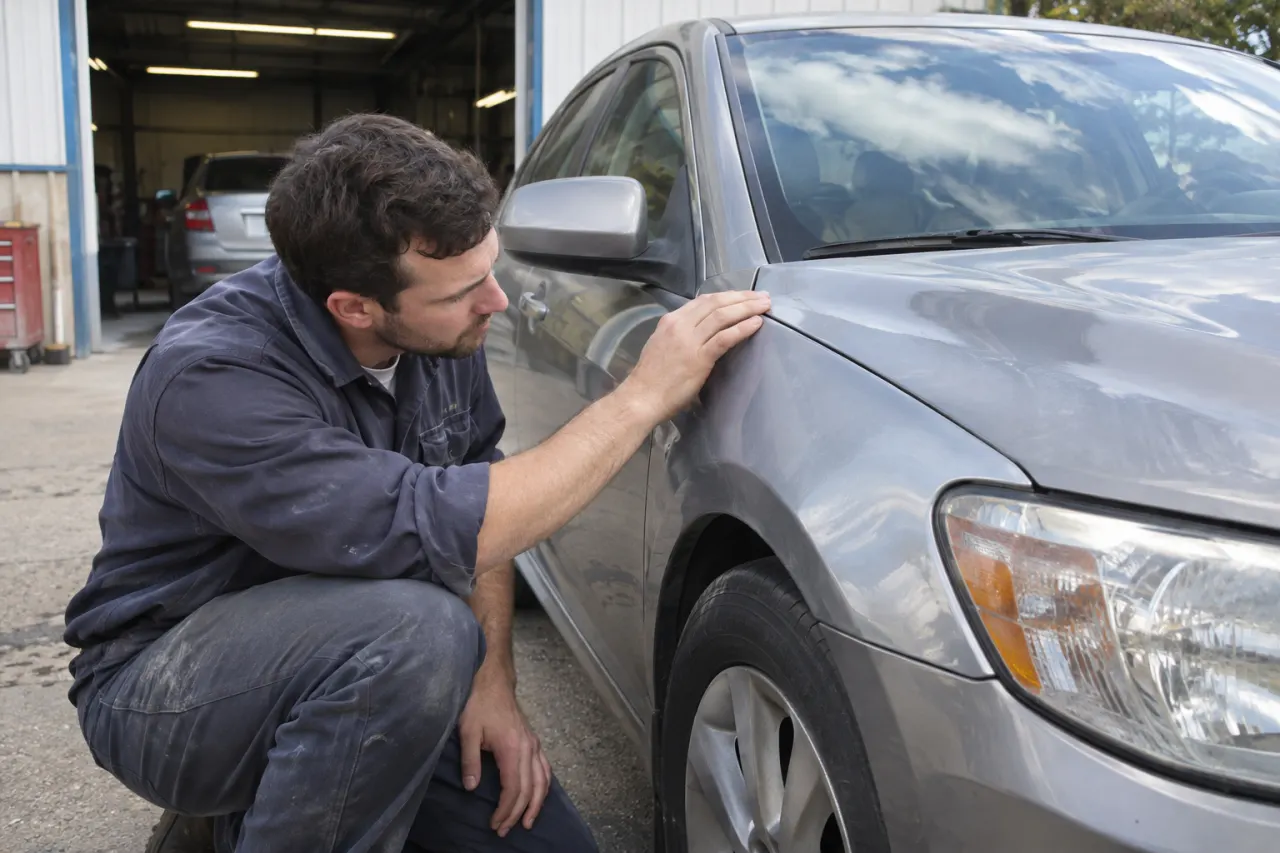
A past accident does not automatically make a used car a bad purchase. The decision depends on what was damaged, how it was repaired, whether safety-critical systems were affected, what an independent inspection finds, and whether the price reflects the remaining uncertainty.
A documented minor repair can be a reasonable compromise. Major structural damage, questionable restraint repairs, conflicting records, or a seller who prevents inspection can make the risk much harder to justify. Do not accept or reject a car from the history report's summary alone. Find out what the entry means for the physical vehicle and your ownership plans.
Start with the actual incident
Ask when the accident occurred, where the car was damaged, and whether it could be driven afterward. Request the repair invoice, available photographs, and information about the shop. Clarify whether airbags deployed and whether suspension, steering, cooling, or structural components required work.
Treat the seller's description as a starting point. “Just cosmetic” is a claim to verify, not a technical finding. The person selling may also have bought the car after the repair and know only part of the story.
Compare dates and mileage across the seller's account, report, and invoices. An unexplained mismatch does not tell you exactly what happened, but it identifies a question that should be resolved before money changes hands.
Separate three broad levels of damage
Minor cosmetic damage
Examples can include limited damage to a bumper cover, paint, or an exterior panel without known structural or safety-system involvement. A properly repaired cosmetic incident may have little effect on daily usability, although it can still influence value and future buyer interest.
Even here, inspect the work. Look at panel fit, lamp operation, paint consistency, water sealing, and the area behind the visible repair where accessible. Some apparently simple incidents affect parking sensors or other equipment that needs correct repair and calibration.
Moderate collision damage
A collision involving several panels, suspension parts, cooling components, or more extensive body repair deserves closer examination. The vehicle may be repairable to a suitable standard, but the invoice and inspection become more important than a favorable appearance.
Ask what additional damage was discovered after disassembly and whether the final work differed from the initial estimate. A preliminary insurer's estimate is not the same as a completed repair invoice. Look for a clear record of what was actually replaced, repaired, and checked.
Major structural or safety-system damage
Damage to structural areas or restraints raises the stakes. Ask about measurements, manufacturer repair procedures, replacement components, and any required system calibration. Use an inspector with appropriate collision-repair expertise rather than assuming a general service check covers these questions.
If the necessary work cannot be verified, declining the car can be reasonable regardless of the discount. You do not have to prove a defect before deciding that uncertainty about safety-critical repairs is unacceptable.
Read the history report as a timeline
A report can identify reported accidents, title events, or loss information, depending on the provider. It cannot capture every incident or demonstrate repair quality. Some damage is repaired without an insurance claim or without reaching a reporting source.
Read the actual entries, dates, mileage, and any severity description. Understand the provider's definitions rather than assuming that a single word establishes the complete damage. A vague entry may require more research; a clean-looking summary cannot overrule visible evidence.
Compare the report with the current title. An accident entry and a branded title are different things. A vehicle may have accident history without salvage status, while a title brand can reflect a different type of loss. Ask about both independently.
Check whether the title changes the transaction
Request the exact title wording and verify the VIN against the vehicle. If the car has a salvage, rebuilt, reconstructed, or other brand, check the implications with the relevant state authority and any insurer or lender involved.
A seller's use of “clean” can be ambiguous. Ask whether they mean no damage brand, no outstanding loan, or simply that they possess the document. Confirm liens and transfer authority separately.
Do not assume registration in one state guarantees straightforward registration elsewhere. If the title history is complicated, obtain answers before placing a deposit. Use What Does a Salvage Title Mean? to organize the distinction between loss history and current title status.
Arrange an independent inspection with the right expertise
Tell the shop about the accident before booking. Ask whether it can inspect the repaired area, assess alignment and structural concerns, scan relevant systems, and identify the limits of its examination. Some vehicles call for both mechanical and collision-specialist input.
Request written findings with photographs where useful. A report should distinguish observations, recommended repairs, and inaccessible areas. Ask what additional inspection would be needed if trim removal or structural measurement is outside the original appointment.
The seller's own inspection or repair warranty may provide evidence, but you should still choose independent advice. A quick test drive cannot verify hidden welds, restraint components, or all the consequences of a collision.
Structural repairs and alignment need more than a straight drive
During a normal test drive, notice pulling, an off-center steering wheel, vibration, unusual tire noise, or unpredictable tracking. Road conditions and tires can affect these symptoms, so do not diagnose structural damage from one observation.
Ask the inspector to assess tire wear, suspension condition, wheel alignment evidence, and the repaired structure as appropriate. An alignment printout can help, but it does not by itself establish that every structural repair was correct.
Similarly, a car that drives straight is not automatically free of past structural damage. Use several forms of evidence rather than treating one favorable behavior as a complete answer.
Airbags, seat belts, and driver-assistance equipment
If airbags deployed, request records showing what restraint components were replaced and how the system was checked. Ask about seat belts, pretensioners, sensors, wiring, and other relevant components rather than focusing only on the visible airbag covers.
An extinguished dashboard warning is not a comprehensive verification of the repair. Have an appropriate professional assess the system and explain any limitations. Unverified restraint repairs are a serious reason to reconsider the purchase.
Modern vehicles may also need attention to cameras, radar, parking sensors, or related systems after certain repairs. Ask for relevant calibration documentation where required for that model and repair, rather than assuming all body work has the same requirements.
Paint and body observations that deserve follow-up
View the car in daylight on clean, dry surfaces where practical. Look for uneven panel gaps, differences in finish, overspray, missing fasteners, poorly fitted trim, and moisture inside lamps or the cabin. These observations can guide questions but do not establish the quality of every repair.
A replaced panel is not automatically a problem. The question is whether the work was appropriate and whether any underlying damage remains. A specialist can help distinguish ordinary refinishing from evidence that needs deeper investigation.
Check practical operation too. Doors, hood, trunk, windows, locks, and seals should function properly. Water leaks or wind noise after a repair can create ongoing inconvenience even when the car otherwise drives acceptably.
Do not let the accident distract you from maintenance
A car can have excellent collision documentation and still be a poor buy because of neglected servicing, worn tires, or expensive mechanical needs. Review maintenance records and scheduled work for the exact model and powertrain.
Ask about oil or coolant consumption, overheating, transmission behavior, warning lights, and recent repairs. Test ordinary equipment. Used Car Buying Checklist helps keep the whole vehicle in view instead of concentrating only on the damaged corner.
Mileage and age also influence the budget. Is a 10-Year-Old Car Too Old to Buy? explains why the condition and ownership plan matter more than a single age threshold.
Price the history and the uncertainty
Compare similar vehicles with comparable mileage, specification, title status, and documented condition. A discount from an ambitious clean-history asking price may not represent genuine value. Look at several alternatives and account for immediate maintenance and inspection costs.
Avoid a universal percentage deduction. The market effect varies by vehicle, severity, documentation, repair quality, and local demand. A modest cosmetic repair and major structural rebuilding should not receive the same adjustment simply because both appear under “accident history.”
Keep a reserve for unresolved but acceptable risks. If the purchase leaves no money for ordinary maintenance, a more complicated history may be a poor fit even when the inspection is broadly reassuring.
Insurance, financing, and resale
Ask the insurer about the exact vehicle and any title brand before buying. Accident history and branded-title status are not interchangeable, and acceptance or valuation questions depend on the insurer and circumstances. Obtain specific answers rather than guessing from a generic quote.
If you need financing, confirm that the lender accepts the title and vehicle. For future resale, expect some buyers to be cautious even when the repairs are documented. Good records can improve understanding but cannot erase the event.
Consider how long you expect to keep the car. Someone planning a quick resale may place more weight on future buyer confidence than someone who can evaluate the repair and intends a longer ownership period.
A balanced decision checklist
Proceed only when you can answer the main questions:
- What happened, and what evidence supports the description?
- Which parts and safety systems were affected?
- Who repaired it, and what documentation is available?
- Does the title or loss history create additional obligations?
- What did the independent inspection find and leave unverified?
- Does the total price compare favorably with realistic alternatives?
- Can you obtain appropriate insurance and financing?
- Are you comfortable explaining the history to a future buyer?
When searching used cars on DealsNonStop, an accident entry should prompt investigation rather than an automatic answer. Buy only when the documentation, inspection, price, and your tolerance for uncertainty align. If essential facts remain hidden, choosing another car is a practical decision.
Sources and further reading
Checked November 7, 2026: FTC guidance on used-car inspections, NMVTIS report coverage, and NHTSA recall lookup. Model-specific repair and calibration requirements should be verified through manufacturer information and a qualified repair professional.