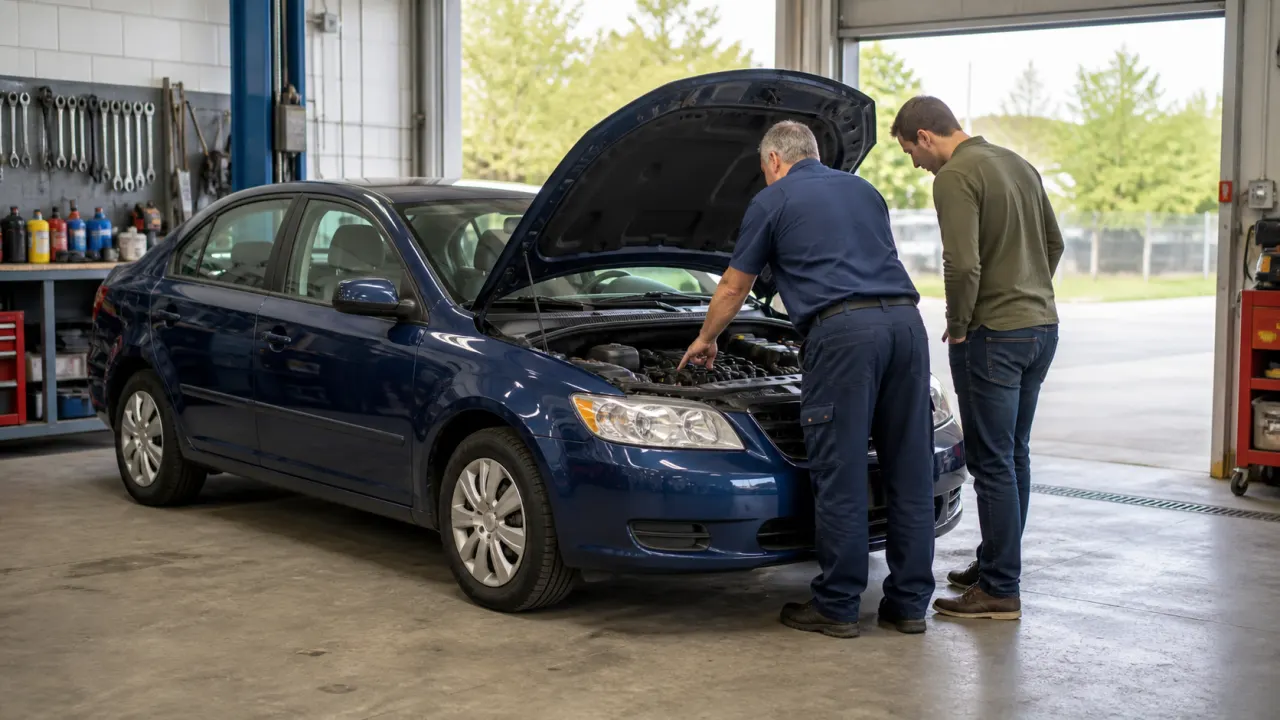
No, a 10-year-old car is not automatically too old to buy. A properly maintained vehicle with a reasonable history, sound mechanical condition, available parts, and an appropriate price can still be a good purchase. A newer car that has been neglected may be a much worse choice.
Buyers understandably worry about reliability, repairs, mileage, safety, fuel economy, resale value, and parts when considering an older used car. Age belongs in the evaluation, but it should be considered alongside maintenance, mileage, accident history, rust, model-specific issues, previous ownership, driving conditions, and inspection results.
Compare current used cars for sale on DealsNonStop as you research age, mileage, condition, and price.
Is 10 years old considered old for a car?
A 10-year-old vehicle is an older used car, but it is not necessarily near the end of its useful life. Its prospects depend on the particular brand and model, engine and transmission, climate, maintenance, driving habits, rust exposure, and quality of previous repairs. There is no honest lifespan promise that applies to every modern vehicle.
Calendar age does increase the chance of wear in materials, electronics, and seals. It can also mean that several scheduled services are due around the same period. The useful question is not simply “How old is too old for a used car?” but “What condition is this specific car in, what will it need next, and does its price reflect that?”
Age versus mileage: which matters more?
Neither should be used alone. A 10-year-old car with moderate mileage and complete service records may be a stronger buy than a six-year-old car that missed oil changes or was poorly repaired. A high-mileage 10-year-old vehicle may remain sound after consistent maintenance and mostly steady driving. Conversely, a low odometer cannot prevent age-related deterioration.
Compare annual use with the type of driving and service history. Frequent short trips can be demanding in different ways from long highway journeys. Long periods parked outside can affect tires, brakes, paint, seals, and the battery even though the odometer barely changes.
For a deeper framework, read How Many Miles Is Too Many for a Used Car?. The strongest decision combines age and mileage with present condition, documentation, and expected use.
What can wear out after 10 years?
Time can affect rubber hoses, drive belts, seals, suspension bushings, engine mounts, weather stripping, tires, batteries, cooling-system parts, brake hoses, and air-conditioning components. Fluids can deteriorate, and corrosion can progress where moisture or road salt reaches exposed metal.
This is not a deterministic repair list. A particular car may have already received several replacements, while another may still have healthy original components. Service records and a hands-on inspection reveal much more than age alone. Ask which parts are original, what was replaced, and what the mechanic expects will need attention soon.
Maintenance history matters more than the birthday
Evidence is more useful than a claim that the car was “well maintained.” Look for dated invoices or a consistent service record covering oil changes, fluid services, spark plugs, transmission work, brakes, battery, cooling system, tires, and suspension repairs. Check whether recalls or model-specific campaigns were addressed where applicable.
Recommended work varies by manufacturer, model, engine, transmission, conditions, and market. Compare the records with the correct owner's manual or manufacturer schedule. If an important service is overdue, do not assume failure is imminent; identify the work and account for it when judging the car and price.
Timing belt versus timing chain
Some engines use a timing belt, while others use a timing chain. If the car has a belt, determine the manufacturer interval and whether documented replacement is due or completed. A seller's verbal assurance is less useful than an invoice identifying the date, mileage, and parts installed.
Not every 10-year-old vehicle uses or currently needs a timing belt. Timing chains are also not automatically maintenance-free forever; lubrication problems, guides, tensioners, or wear can still matter. Research the exact engine rather than applying a generic rule.
Rust and corrosion
Climate and driving location make an enormous difference. A vehicle exposed to frequent road salt or coastal conditions may look very different underneath from one used in a dry climate. Inspect wheel arches, rocker panels, the underbody, suspension mounting points, brake lines, exhaust components, and door bottoms.
Light surface rust on a replaceable part is different from corrosion that weakens the body, subframe, suspension mounts, or brake lines. Do not crawl under an unsupported vehicle. If structural rust is possible, have a qualified professional evaluate it before purchase.
Is a low-mileage 10-year-old car better?
Low mileage can reduce some forms of wear, but unusually low mileage does not make a car perfect. Extended storage or irregular use can contribute to discharged batteries, flat-spotted or aged tires, sticking brakes, old fluids, dry seals, fuel-system problems, and moisture-related corrosion.
Ask how the vehicle was stored and why it was driven so little. Regular use paired with proper maintenance may be preferable to extremely low mileage combined with neglect. Check tire age, not only tread depth, and confirm that time-based services were performed.
Safety and technology trade-offs
A vehicle from around 10 years ago may lack features available on some newer models, including automatic emergency braking, blind-spot monitoring, lane-keeping assistance, adaptive cruise control, advanced camera systems, or Apple CarPlay and Android Auto. Equipment differs by year, trim, options, and market; some older cars have certain systems, while some newer ones do not.
Compare the specific vehicles you are considering. Fundamental roadworthiness also depends on working airbags and warning systems, sound tires and brakes, clear lights and glass, reliable steering, and proper repairs. Technology cannot compensate for poor mechanical condition.
Fuel economy
Newer powertrains may offer better fuel efficiency, but newer does not automatically mean more economical. Vehicle size, engine, transmission, drivetrain, condition, and driving pattern all matter. Compare official information and real use for the exact models, and remember that a poorly running older car may not perform as originally intended.
Insurance and total ownership costs
An older car may offer a lower purchase price, slower depreciation, or possibly lower insurance expense depending on the vehicle, driver, location, coverage, and insurer. It may also bring more maintenance, greater repair uncertainty, lower resale value, or parts that are harder to obtain.
Get vehicle-specific insurance quotes and reserve money for immediate maintenance. A low purchase price is not the same as a low total cost, especially if the buyer spends the entire budget on the transaction and cannot address tires, fluids, or emerging faults.
Parts availability
Before buying, check whether replacement parts are readily available, independent mechanics know the model, components are unusually expensive, and the manufacturer or aftermarket still supports important systems. This deserves extra attention with discontinued models, older luxury vehicles, low-volume cars, and unusual imports.
Parts availability is not just about price. A long delay for a critical component can leave an otherwise repairable vehicle unusable. Ask a mechanic or parts supplier about the exact model, engine, and transmission.
What about a 10-year-old luxury car?
Depreciation can make an older luxury vehicle appear surprisingly affordable. The original purchase price may have fallen dramatically while premium-sized tires, complex electronics, specialized suspension, and model-specific parts remain costly to maintain or replace.
That does not make every older luxury car a bad purchase. Strong records, specialist inspection, parts research, and an adequate repair budget can make one workable for the right buyer. Treat the attractive asking price as the beginning of the cost analysis, not the end.
When a 10-year-old car can be a good buy
A promising candidate usually has:
- Complete or credible maintenance history
- A satisfactory independent mechanical inspection
- Mileage consistent with its condition and price
- No serious structural rust or poorly repaired structural damage
- No major unresolved warning lights, leaks, or abnormal noises
- Serviceable tires and brakes
- A price that reflects age, condition, history, and upcoming work
- Available replacement parts and local repair support
- No unresolved major issue relevant to that specific model and vehicle
When you should be cautious
Pause and investigate missing records, a seller who will not provide the VIN or allow an independent inspection, serious rust, engine knocking, transmission slipping, persistent warning lights, significant leaks, possible flood evidence, odometer inconsistencies, or poorly repaired accident damage. Multiple major systems needing work can overwhelm an apparently low price.
An unexplained price far below comparable cars deserves additional verification. One warning sign does not automatically prove fraud or make the vehicle irreparable, but it should not be ignored or explained away without evidence.
Get a pre-purchase inspection
An independent pre-purchase inspection, or PPI, is one of the most valuable steps when buying an older used car. A qualified mechanic can evaluate the engine, transmission, suspension, steering, brakes, cooling system, leaks, rust, tires, electrical equipment, diagnostic codes, and signs of previous repairs.
No inspection guarantees that nothing will fail later, but it can reveal present defects and likely near-term work. Choose a mechanic who is independent of the seller and familiar with the vehicle type. Use the findings to decide whether to proceed, negotiate, or walk away—not merely to seek a discount.
Use the detailed Used Car Buying Checklist: What to Inspect Before You Buy before the viewing and test drive.
What should a 10-year-old car cost?
There is no responsible universal price range. Value depends on make, model, trim, powertrain, mileage, condition, location, accident history, maintenance evidence, title status, options, and local demand. Compare several current listings for genuinely similar vehicles, then adjust your judgment for inspection findings and upcoming service.
Use DealsNonStop's used-car listings to compare age, mileage, condition, seller information, and asking prices. An online listing is a starting point, not proof of market value or vehicle condition.
Depreciation can be an advantage
Much of a vehicle's initial depreciation may already have occurred by around its tenth year. That can provide more equipment or vehicle for the purchase price, and subsequent value loss may be slower than during the early years.
The trade-off is increased maintenance and repair risk. Lower depreciation only helps when the vehicle remains suitable and ownership costs fit the budget. Do not stretch for a prestigious model if routine upkeep or one predictable repair would be unaffordable.
10-year-old car versus newer used car
These are general tendencies, not universal rules:
| Factor | 10-year-old car | Newer used car |
|---|---|---|
| Purchase price | Often lower | Usually higher |
| Depreciation | May be slower | Often greater |
| Repair risk | Typically higher | Typically lower |
| Technology | Older | Usually newer |
| Safety features | Depends on model and trim | May include newer systems |
| Maintenance | May require more | May require less initially |
| Insurance | Depends on vehicle and coverage | Depends on vehicle and coverage |
Quick checklist before buying a 10-year-old car
- Check the VIN and available vehicle history
- Review maintenance records and manufacturer schedules
- Compare age with mileage and previous use
- Inspect for cosmetic and structural rust
- Check tire condition and age
- Check accessible fluids correctly
- Test lights, climate control, windows, locks, and electronics
- Start the engine cold if possible
- Test-drive the vehicle in varied conditions
- Check braking and steering behavior
- Observe transmission behavior
- Look for leaks and warning lights
- Research parts and mechanic availability
- Identify major completed and upcoming maintenance
- Arrange an independent pre-purchase inspection
- Compare similar vehicles before negotiating
The verdict
A 10-year-old car is not necessarily too old to buy. A well-maintained older vehicle can be a better purchase than a newer one with neglected service, hidden damage, or unresolved problems. Focus on condition, maintenance, mileage, history, inspection results, price, and parts support rather than rejecting a car for its birthday alone.
Browse used cars on DealsNonStop and compare age, mileage, condition, price, and seller information before choosing your next vehicle.