A freshly cleaned used car can look reassuring while hiding problems beneath the carpet or inside electrical connectors. Significant flooding may affect wiring, sensors, electronic modules, interior materials, and mechanical components. Corrosion or contamination can create problems that are not obvious during a short viewing.
That does not mean every car exposed to water is unusable. The extent of exposure, water type, affected components, and quality of repairs matter. No single visual clue proves flood damage, and a spotless interior does not rule it out.
If you want to know how to tell if a car has flood damage, combine physical checks with vehicle history, VIN verification, service records, and an independent inspection. Treat this guide as a way to identify questions for a professional, rather than a way to certify a vehicle yourself.
Why flood damage can be difficult to detect
Carpets and seats can be replaced, visible mud cleaned away, and damaged electronics changed. Cosmetic repairs may make a vehicle comfortable and presentable without revealing what happened underneath. Some repairs are legitimate and documented; others leave important uncertainties.
Look for a consistent story across the car, records, and seller's explanation. Several unexplained clues in different areas deserve more attention than a single rusty bolt. Ask what was repaired, when, why, and whether invoices identify the vehicle.
Check the VIN and vehicle history first
Obtain the VIN before traveling. At the viewing, compare it with the accessible identification plate, documents, and history report. Resolve mismatches before discussing payment. A report for a similar vehicle tells you nothing about the one in front of you.
Review available information for:
- Flood, salvage, or rebuilt title descriptions, where those categories exist.
- Insurance losses and reported major damage.
- Previous registration locations and ownership changes.
- Mileage entries, repair records, and unexplained gaps.
Terminology and reporting coverage vary by country and provider. A salvage entry does not necessarily mean flooding, and a rebuilt label does not explain every repair. Ask for the underlying details. A clean history report cannot guarantee that a vehicle never experienced flooding: unreported events and incomplete records remain possible.
Smell the interior before the test drive
Notice the cabin smell when you first open the doors, before ventilation changes it. Mustiness, a mold-like odor, or damp upholstery should prompt questions. Strong chemical cleaning smells or excessive air freshener can make assessment harder.
Odors have other explanations, including spills, leaking seals, and a blocked drain. Ask whether there has been a leak and how it was repaired. An explanation becomes more useful when it matches the location of stains and supporting invoices.
Inspect carpets and floor areas
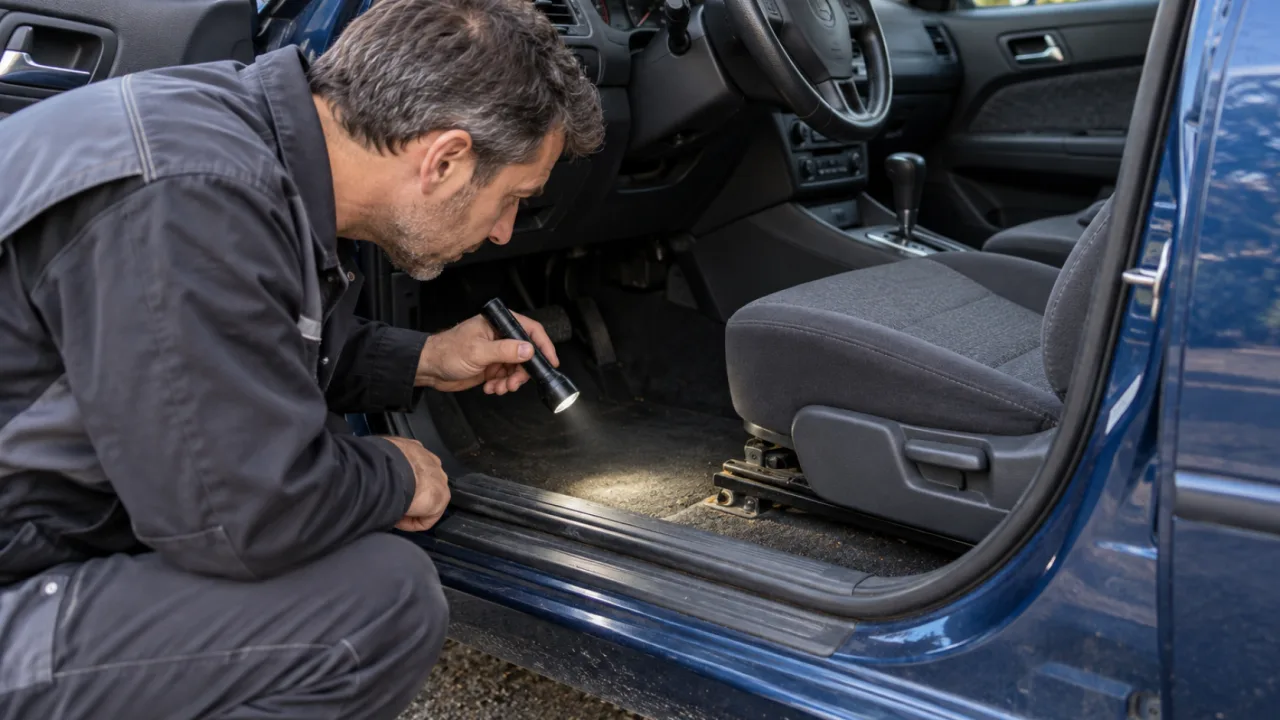
With permission, lift removable floor mats and look at accessible carpet edges without pulling apart trim. Check around seat mounts, the front and rear footwells, and the transition into the trunk. Use a flashlight rather than relying on photographs.
Look for mud, fine silt, water stains, dampness, rusty fasteners, and mismatched carpet sections. Recently replaced carpet in an otherwise worn cabin deserves a straightforward question about the work. It could reflect ordinary refurbishment or a spill; it is not automatic evidence of fraud.
Avoid disturbing moldy material or forcing carpet loose. Photograph concerns with permission so an inspector can revisit the same places.
Look under the seats
Move the seats using their normal controls, keeping fingers clear of mechanisms. Look at visible rails, mounting bolts, exposed floor areas, and accessible connectors. These less visible places may receive less cosmetic cleaning than the dashboard and cushions.
Sediment, unusual staining, and corrosion on several protected parts warrant investigation. A small amount of surface rust alone cannot establish the cause. Do not unplug connectors or probe wiring: seat assemblies may include safety-system components that require professional handling.
Inspect the trunk and spare-tire well
Lift the removable trunk floor if the owner permits it. Check the spare-tire recess, tool storage, side pockets, and visible hardware for moisture, silt, standing-water marks, mold, or corrosion. Compare the condition of stored tools with the surrounding area.
A trunk leak can also leave water behind. Ask whether seals, lamps, or body repairs were involved and whether the source was fixed. A dry surface today does not explain older waterlines underneath the storage tray.
Pull out the seat belts
Extend each belt gently through its normal travel and inspect the webbing for staining, dirt, mud, and discoloration. Compare the exposed sections with the portions normally hidden near the retractors. Check that belts retract and latch normally.
These marks are possible signs of water damage in a car, but drinks, dirt, and ordinary use can also stain belts. Do not disassemble retractors or accept a seller's assurance as a substitute for inspecting any damaged safety equipment.
Test the electrical equipment methodically
Use a written list so a working radio does not distract you from other functions. Check equipment fitted to that particular vehicle:
- Power windows, locks, mirrors, and seat controls.
- Dashboard displays and normal warning-light checks.
- Infotainment, audio, and accessible USB ports.
- Heating and air conditioning.
- Exterior and interior lights, wipers, and sunroof.
- Backup camera and parking sensors, in a safe setting.
Repeat a suspicious function rather than dismissing an intermittent fault. Electrical glitches have many possible causes, including age and unrelated repairs. Record exactly what failed and ask a mechanic to diagnose it; guessing that every fault is flood damage is unhelpful.
Look for corrosion in unusual places
Weather-exposed parts and protected interior hardware need different interpretation. Visible corrosion on interior screws, seat hardware, under-dash components, trunk fittings, or accessible connectors deserves closer attention, especially alongside sediment or staining.
Look only where you can see safely. Do not remove fuse-box covers without permission, dismantle the dashboard, or disconnect electrical components. Ask the inspector to examine protected connectors and fuse areas properly. The pattern and location of corrosion matter more than simply finding any rust.
Check headlights and taillights
Look through lamp lenses for persistent condensation, water marks, trapped dirt, or visible moisture. Compare lamps on both sides and ask about replacements. Dirt inside a housing can justify investigating how it entered.
Condensation can occur for reasons unrelated to flooding, including ventilation or seal problems. A lamp issue becomes more concerning when other areas show unexplained water evidence. Do not treat a fogged headlight as a diagnosis of the whole vehicle.
Inspect the engine bay without dismantling anything
With the engine off and cool, look for accessible silt deposits, mud in sheltered recesses, unusual corrosion, and visible wiring repairs. Recently replaced electrical parts deserve questions, particularly if several were changed together without an explanation.
A cleaned engine bay or replacement alternator can have an ordinary maintenance explanation. Compare invoices with the seller's account. Keep clear of hot or moving parts and leave connector inspection to a mechanic. On hybrid and electric vehicles, do not touch high-voltage cables, batteries, or covers.
Let a professional assess questionable fluids
Only check fluids using the manufacturer's instructions and when it is safe. Never open a hot cooling system or crawl beneath an unsupported vehicle. Some cars have no owner-accessible transmission-fluid check.
Unexpected contamination, an abnormal level, or an unusual appearance warrants professional assessment. No particular fluid color or texture automatically confirms flooding; other mechanical faults or maintenance issues may be responsible. Fresh fluids also cannot prove that the vehicle was never water-damaged.
Test drive only when the car appears safe
During an agreed, safe route, watch for warning lights, rough running, unusual noises, transmission behavior, and intermittent sensor or electrical errors. Avoid operating menus while driving; ask a passenger to note observations or stop safely.
These symptoms can have unrelated causes. Describe them accurately to the inspector instead of deciding on a diagnosis yourself. If significant water exposure is suspected, arrange professional assessment before starting or driving the vehicle. A successful short drive cannot eliminate hidden corrosion or future electrical uncertainty.
Ask about an interior that looks unusually new
New seats, carpet, or trim in a heavily worn vehicle may reflect sensible refurbishment, an accident repair, or water-related work. Ask why the materials were replaced and whether there are photographs or invoices from before the repair.
Also put age and mileage in context. How Many Miles Is Too Many for a Used Car? explains why an attractive odometer reading cannot replace an assessment of condition and history.
Consider where the car previously lived
Registration in a flood-affected area justifies closer inspection, not an accusation. Many vehicles in the same region escape flooding, while damaged cars can move far from the original event. Current location alone is therefore a poor screening tool.
Ask whether the vehicle was ever submerged, stored in standing water, or repaired after water entered. Request specifics about affected areas and completed work. Compare the answer with history entries and physical evidence rather than making assumptions about the seller's address.
Get an independent pre-purchase inspection
Choose a mechanic independently and mention every concern before the appointment. Ask them to assess visible wiring, connectors, electronic modules where accessible, underbody corrosion, engine and transmission condition, and evidence of previous repairs. Clarify what the inspection can and cannot establish without dismantling components.
Use Used Car Buying Checklist: What to Inspect Before You Buy to cover the broader purchase. If the seller blocks reasonable inspection arrangements, consider another vehicle. Do not send money merely to preserve the opportunity; read How to Avoid Used-Car Deposit Scams before agreeing to a reservation.
For additional background, NHTSA's flood-damaged vehicle guidance describes buyer warning signs and the importance of assessment. It supports caution rather than a guarantee that any checklist can identify every damaged car.
Flood-damage checklist
- Check VIN, history, and service records.
- Smell the interior before ventilation masks odors.
- Inspect accessible carpets and floor areas.
- Look under seats without disturbing wiring.
- Inspect the trunk and spare-tire well.
- Extend and check seat belts.
- Test fitted electronics.
- Look for corrosion in protected places.
- Check lights for moisture or trapped dirt.
- Inspect the engine bay visually.
- Test drive only when safe.
- Get an independent inspection before committing.
Make the decision using several kinds of evidence
Knowing how to spot a flooded car means recognizing uncertainty as well as warning signs. If buying a flood-damaged car is under consideration, ask a qualified specialist to explain repair quality, remaining risks, and suitability for your use. A discount cannot resolve unanswered safety questions.
Once condition is understood, use How to Negotiate the Price of a Used Car to discuss documented findings. Never rely on one clue, a seller's reassurance, or a clean report alone.
Browse used cars on DealsNonStop, compare vehicle history, mileage, condition, and seller information, and inspect any vehicle carefully before you buy.