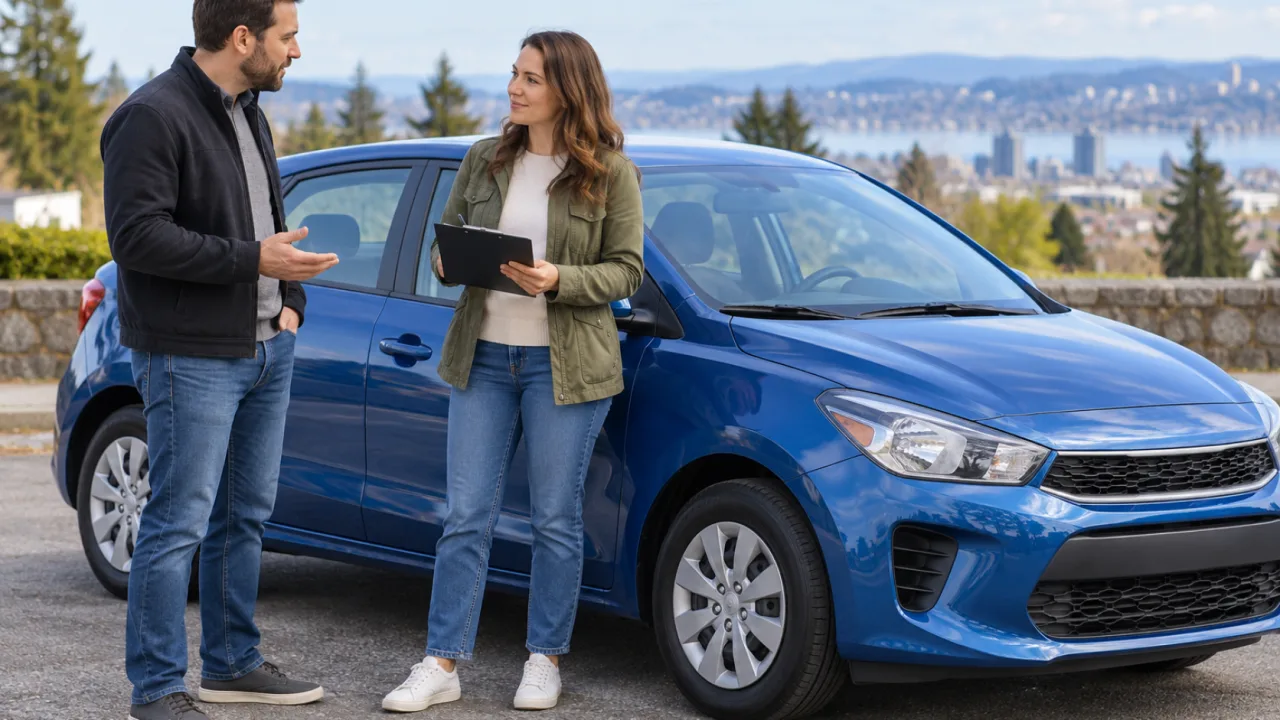
Successful used-car negotiation begins before anyone discusses a discount. Research, inspection, and a clear budget give you a stronger position than aggressive bargaining. They also help you recognize when an apparently generous reduction still leaves you with the wrong car.
Whether you are negotiating with a private car seller or a dealer, aim for a fair price supported by evidence. You do not need invented competing offers, exaggerated repair claims, or a confrontation. You need a realistic alternative and the ability to leave an unsuitable deal.
Research comparable cars before contacting the seller
Start with several used-car listings on DealsNonStop. Compare make, model, model year, trim, mileage, condition, location, and options. Save useful examples so you can explain which vehicles influenced your thinking.
A basic version and a highly equipped version are not direct substitutes. Nor are a well-documented car and one with unclear history. Note meaningful differences rather than averaging every advertisement into a supposedly exact market value.
Listing prices show what sellers ask, not necessarily completed transaction prices. Use them to establish a reasonable range and identify alternatives you would actually consider. Where available, other reputable valuation information can provide additional context, but it still needs to match the specific vehicle.
Separate asking price from market value
The asking price is the seller's starting position. It may reflect recent maintenance, desirable equipment, local availability, or an expectation of negotiation. A firm price is not automatically unreasonable, and a negotiable price is not automatically inflated.
Ask what supports the price and compare the explanation with the evidence. Your goal is to understand the car well enough to make an offer, rather than prove that the seller is wrong. Sometimes the best-value car needs little negotiation because it was priced fairly from the beginning.
Inspect before making your final offer
You can discuss a provisional price range before visiting, but make a final commitment only after appropriate checks. Inspect tires, brakes, bodywork, interior, electronics, warning lights, engine behavior, and transmission operation. Review records and complete a safe test drive with permission.
Use Used Car Buying Checklist: What to Inspect Before You Buy and arrange an independent mechanic's assessment. A history report and short drive cannot replace that inspection. Ask the mechanic to distinguish immediate repairs from routine future maintenance.
If there are unexplained water stains or protected-area corrosion, consult How to Tell If a Used Car Was Flood-Damaged. Suspected serious damage calls for investigation, not simply a larger discount.
Put mileage and age in context
Mileage affects value alongside condition, maintenance, and age. Compare the odometer with service records and available history, and ask about gaps or inconsistencies. Do not assume low mileage makes a car trouble-free or that high mileage makes it worthless.
How Many Miles Is Too Many for a Used Car? explains the broader assessment. If you are considering an older example, Is a 10-Year-Old Car Too Old to Buy? can help you frame questions about age-related needs and suitability.
Review maintenance history and upcoming expenses
Invoices for recent tires, brakes, a battery, or major scheduled maintenance can add practical value when they match the car. Ask what was done, when, and by whom. Recent work does not necessarily add its full invoice amount to resale value, but it may reduce near-term expenses.
Missing records do not automatically mean the car is bad. They increase uncertainty and may justify checking the maintenance schedule with a mechanic. Avoid accusing the seller of neglect simply because paperwork is incomplete.
Create a short list of documented upcoming costs: tires nearing replacement, brake service, scheduled work, cosmetic repairs you care about, or warning lights requiring diagnosis. Get credible estimates where possible. Do not invent repair prices or subtract the same issue twice under different descriptions.
Ask about the sale without becoming intrusive
Ask why the seller is selling and how long the car has been advertised. A change in transport needs, a replacement vehicle, or an unused second car can provide useful context. Listen without pressing for private financial or family details.
A long-running listing may suggest flexibility, but it does not prove desperation or a defect. The seller might have limited availability or be content to wait. Use the answer to understand the conversation, rather than manufacture pressure.
Let the seller explain their position
Before making a very low offer, ask whether the listed price is negotiable and whether any recent work supports it. You may learn that the seller has already adjusted the price or included useful equipment.
If the price is firm, decide whether the car still makes sense within your research and budget. Repeatedly demanding a discount rarely creates new information. You can remain interested while making clear that you will decide after inspection and document checks.
Set a budget and a reasonable opening offer
Decide your maximum total spending before the meeting. Allow for applicable fees, insurance, immediate repairs, and an ongoing reserve. You do not need to reveal your maximum budget immediately; an opening offer should reflect the vehicle's value and condition.
There is no universal answer to “How much should I offer for a used car?” Avoid rules such as always offering a fixed percentage below asking. Start from comparable alternatives, adjust for meaningful differences, and consider what the inspection actually found.
Choose an offer you can explain respectfully. Leave room for discussion if appropriate, but do not make a deliberately absurd offer just to provoke a reaction. If the evidence supports the asking price, paying it may be more sensible than losing a suitable vehicle over a symbolic discount.
Explain your offer using facts
A useful approach is: “The comparable vehicles I found are around X, and this car will need tires soon, so my offer is Y.” Here, X and Y should come from your actual research and budget, not an invented formula.
Show the relevant listing differences or written estimate if helpful. Be clear about whether your offer depends on the inspection, documents, or completion of agreed work. Give the seller time to respond rather than filling every silence with a higher offer.
Do not invent a competing seller, claim a mechanic condemned the car when they did not, or describe optional cosmetic improvements as urgent mechanical repairs. Accurate information makes an agreement easier to document and assess.
Negotiate the total purchase price
At a dealership, ask for an itemized out-the-door price: the total payable before financing, including applicable taxes and fees. Confirm which items are optional and compare written totals for the same vehicle and agreed terms.
A low monthly payment can result from a longer term, larger down payment, different interest rate, or a final payment. None of those automatically means the vehicle price was reduced. Read the FTC's financing guidance for background on comparing total cost rather than payment alone.
For the wider affordability decision, Used Car vs New Car: Which Makes More Financial Sense? explains why purchase price is only one ownership expense.
Understand trade-in, financing, and add-ons separately
Ask for the vehicle price, trade-in allowance, any existing loan payoff, financing terms, and optional add-ons as separate figures. A more generous trade-in allowance can be offset by a higher purchase price or extra products.
Compare financing with other available written offers and check the complete repayment commitment. Understand every optional warranty, protection package, or accessory before agreeing. When one figure changes, ask for a revised full breakdown so you can see whether the overall deal improved.
Adjust the conversation to the seller
Private seller
Focus on condition, service history, the asking price, and a workable payment and handover arrangement. Confirm how the seller connects to the ownership documents and resolve any finance or lien questions through appropriate channels before paying.
Agree on where and when the inspection and transfer can happen. A practical schedule can help both sides, but convenience should not replace verification. Do not assume a private seller can offer dealer-style financing or warranty coverage.
Dealer
Request the out-the-door price in writing and examine dealer fees, financing, trade-in figures, and optional products. Ask whether an advertised price has conditions that apply to you. Keep a copy of the final breakdown you accepted.
Confirm warranty terms and written repair promises for the actual car. A dealer's inspection or certification does not eliminate the value of an independent assessment. Neither a private seller nor a dealer should be presumed dishonest solely because of the type of sale.
Decide whether to negotiate repairs or price
An inspection finding can lead to a lower price, a seller-completed repair, additional documentation, or acceptance of the condition at an adjusted price. Each option needs clarity about what remains your responsibility.
If the seller will repair something, document the scope, completion timing, and evidence you will receive. Consider reinspection before payment. If you accept a discount instead, confirm that you can arrange and afford the work. Do not assume a price reduction makes a safety problem acceptable for driving home.
Be prepared to walk away
Leave the deal if the total exceeds your budget, reasonable inspection is refused, serious unexplained problems emerge, or documents remain unclear. A lower price cannot solve uncertainty about ownership or make an unsafe car suitable.
Urgency can distort judgment. “Someone else will buy it,” “I need this exact car,” and “I already traveled here” are reasons to pause. Time already spent is not a reason to commit more money. A genuine alternative listing makes leaving easier.
Do not let negotiation pressure lead to a rushed deposit
Agreement on price does not mean you should immediately send money to reserve the vehicle. Understand who receives the deposit, what it reserves, any conditions, and when it is refundable. Put the terms in writing before payment and verify the car and seller first.
Read How to Avoid Used-Car Deposit Scams if you are asked to pay remotely or urgently. Transfer procedures and legal effects vary by jurisdiction, so verify the relevant local requirements rather than assuming every deposit works the same way.
Negotiation mistakes to avoid
- Bargaining without researching comparable vehicles.
- Focusing only on monthly payment.
- Revealing your maximum before assessing the car.
- Insulting the seller or making an unrealistic low offer.
- Exaggerating repair costs or inventing alternatives.
- Ignoring mechanical problems because a discount looks attractive.
- Becoming attached to one vehicle.
- Paying before verifying paperwork.
- Sending a deposit under pressure.
Used-car negotiation checklist
- Research similar listings.
- Set a maximum budget with room for ownership costs.
- Check VIN and available vehicle history.
- Inspect the car and arrange an independent assessment.
- Complete a safe test drive.
- Review service records.
- Estimate upcoming expenses using credible information.
- Decide on an evidence-based opening offer.
- Negotiate the total purchase price.
- Review paperwork and written promises.
- Be prepared to walk away.
Aim for a fair, understood purchase
The best negotiation is not necessarily getting the lowest possible price. It is reaching a fair price for a vehicle you have properly inspected and understand. Clear evidence, respectful discussion, and a firm budget help you recognize that agreement.
Browse used cars on DealsNonStop, compare similar listings, and use real market alternatives to prepare before negotiating.