A popular used car can attract several buyers, and nobody enjoys missing a promising deal. That pressure becomes stronger when you are searching remotely or the seller asks for a quick payment to “hold” the vehicle while you arrange a visit.
A deposit is not automatically a scam, but it should come after reasonable verification, not replace it. Before paying, understand which vehicle you are reserving, who is entitled to sell it, what the deposit does, and when it can be refunded.
Common used-car deposit scam patterns
A fake car listing may reuse photographs from a genuine advertisement. The vehicle in the photos might exist somewhere, but the advertiser may not own it or have access to it. Another seller may advertise the same supposed opportunity to multiple buyers and collect several reservation payments.
Some stories explain away every opportunity to inspect: the seller is traveling, the car is already with a shipping company, or a deposit is required before the VIN can be provided. Travel and shipping can be legitimate; a story that prevents all independent verification deserves caution.
A more elaborate version introduces an escrow website, shipping invoice, or branded email that appears to protect the transaction. The third-party service may actually be controlled by the same person requesting payment.
The FBI's Internet Crime Complaint Center describes fraudulent online vehicle advertisements and impersonated transaction services. Treat a familiar logo or professional-looking invoice as a claim to verify, rather than evidence that a company is involved.
Warning signs to investigate
Several unresolved inconsistencies can justify walking away. Watch for:
- A price dramatically below comparable cars without a convincing explanation.
- Refusal to provide the VIN or details that do not match it.
- No opportunity to see the actual vehicle or arrange an inspection.
- Only stock photos, copied pictures, or a prerecorded video.
- Pressure to send money before asking ordinary questions.
- Payment instructions naming someone unrelated to the seller.
- Requests for gift cards, cryptocurrency, or remote cash delivery.
- A shipping or escrow arrangement you cannot verify independently.
No single warning sign is absolute proof of fraud. An owner may have privacy concerns or an inconvenient schedule. The useful question is whether a reasonable alternative allows you to verify the vehicle and transaction without surrendering money first.
Verify the car before paying
Ask for the vehicle identification number and compare it with the advertisement, the physical vehicle, and available ownership documents. Check the year, make, model, engine, and other details you can establish. Trim descriptions can be mistaken, so clarify differences rather than assuming an advertisement is accurate.
A VIN lookup can help identify discrepancies, but a valid VIN is not proof that the advertiser owns that car. Someone can copy a real number just as they can copy photographs. Connect the number to the actual vehicle during a viewing or independent inspection.
Review vehicle history where available and compare reported mileage with the odometer and service records. History reports may be incomplete; they do not replace a mechanical inspection or establish that every repair has been disclosed.
Before completing a purchase, verify the applicable title or ownership documentation and understand any lien or finance situation. Procedures vary by jurisdiction. Use the relevant vehicle authority or a qualified local professional to clarify transfer requirements rather than relying on a seller's promise that paperwork can be fixed later.
See the vehicle in person when possible
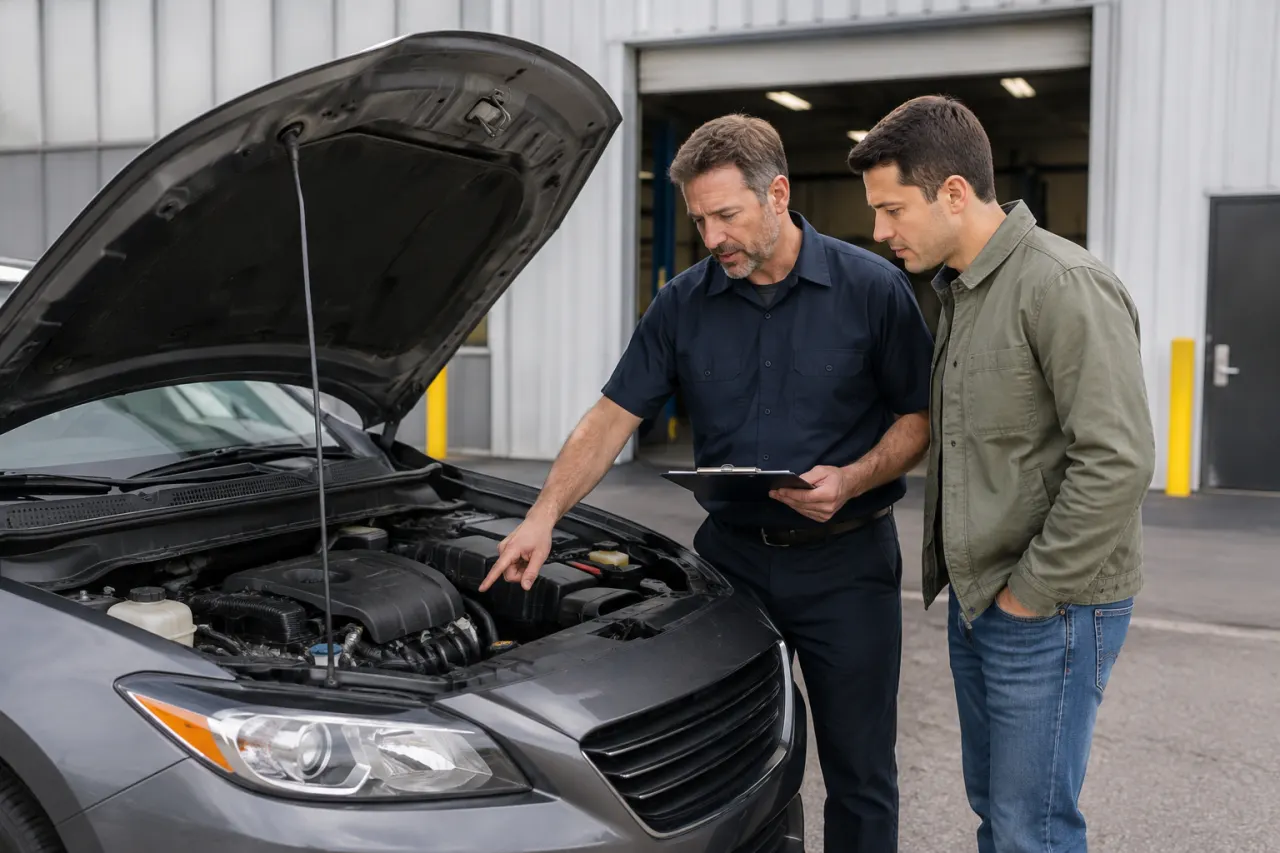
Arrange a sensible viewing location and time. Let someone you trust know your plans, and consider bringing them along. Do not enter an unsafe situation simply because you have already spent time talking to the seller.
Compare the actual car with the photographs: body color, wheels, interior, damage, equipment, and overall condition. Check the VIN plate and other appropriate identifying information. Where relevant, compare registration details with the documents being presented.
Observe whether the seller has normal access to and control of the car. Possessing keys or standing beside a vehicle is helpful context, but it is not conclusive proof of ownership. Ask how their name and role connect to the paperwork, especially if they say they are selling for someone else.
Arrange an independent inspection
Choose a mechanic or inspection service independently and ask for a pre-purchase inspection before committing money on terms you cannot reverse. Agree on the scope, cost, location, and how you will receive the findings directly.
An inspection can identify mechanical, structural, or maintenance concerns that photographs and a short drive may miss. Ask whether the inspector checked the VIN and mileage and whether there are limitations to the inspection. Their mechanical assessment does not necessarily establish legal ownership.
Use Used Car Buying Checklist: What to Inspect Before You Buy to organize questions about condition, records, and the test drive. If the seller refuses every reasonable inspection arrangement, do not let a low price compensate for the missing information.
Put mileage and age in context
A cheap vehicle is not necessarily a fraudulent listing; it may have genuine maintenance needs or limited remaining usefulness for your plans. Compare similar cars using mileage, condition, service history, location, and specification rather than price alone.
Read How Many Miles Is Too Many for a Used Car? and Is a 10-Year-Old Car Too Old to Buy? for ways to evaluate those trade-offs. Understanding ordinary reasons for a lower asking price helps you ask better questions without treating every bargain as a scam.
Be more careful with remote purchases
If you cannot attend, strengthen verification rather than removing it. Request a live walkthrough where the seller can show the car and answer specific questions. Ask to see identifying details and areas relevant to the advertisement.
Arrange an independent local inspection, receive the report directly, and confirm documentation through appropriate channels. A live video can still be misleading, and a scanned document can be altered. Several checks should support the same account of the vehicle and seller.
If shipping is involved, contact the carrier independently to verify the booking, services, timing, and payment arrangements. Know who is responsible if transport is delayed or the vehicle differs from the description. These steps reduce uncertainty; they do not eliminate the risks of buying remotely.
Check escrow and shipping services independently
Do not assume a service is genuine because a seller links to it. Find the company's official contact information yourself and check whether it actually offers the proposed vehicle transaction service.
Confirm the transaction through the genuine company, including the release conditions, fees, dispute process, and payment destination. Read the domain name carefully. A familiar brand with an extra word, altered spelling, or different domain may be an imitation.
A padlock in the browser only indicates an encrypted connection; it does not establish that a business is trustworthy. Likewise, emailed “payment secured” messages and screenshots do not substitute for confirmation through your own verified account or an independently contacted provider.
Understand payment risks
Keep a clear record of every proposed payment: amount, currency, recipient, purpose, date, and associated vehicle. Ask the provider about relevant dispute options before transferring money rather than assuming you can reverse it later.
Wire transfers, cryptocurrency, gift cards, cash sent remotely, and some person-to-person transfers can offer limited recovery options. Provider rules may depend on whether the payment is treated as a purchase, the transaction category, and where you live. No payment method makes an unverified car or seller legitimate.
If the recipient's name changes or the seller requests payment to a friend, pause. An explanation is not enough on its own; verify why that person is authorized to receive the money. Avoid dividing payments among unrelated recipients simply because the seller says it will be faster.
Should you ever pay a deposit?
Legitimate sellers may request a deposit to reserve a vehicle while agreed steps are completed. Whether you accept depends on the verification you have done and terms you understand, not on a universal rule that every deposit is safe or unsafe.
Get the agreement in writing before paying. It should identify:
- The vehicle and VIN.
- The exact deposit amount and who receives it.
- How long the vehicle will be reserved.
- Whether the payment reduces the final purchase price.
- Whether it is refundable and under which conditions.
- What happens if inspection reveals a problem.
- What happens if the seller cannot complete the sale.
- Any deadline or action required from either party.
Do not assume the word “refundable” answers every question. Clarify how a refund would be requested and paid. The legal effect of deposit terms varies by location; seek qualified local advice when necessary rather than relying on a generic promise.
If the seller says others are waiting
Other interested buyers may be real. That does not change your need to verify the car and understand the agreement. A calm response is enough: “I can proceed once the inspection and deposit terms are confirmed.”
Set your conditions before negotiating so that a last-minute deadline does not change them. If key information remains unavailable, walk away. Missing one car can be disappointing, but it is a better outcome than paying for an opportunity you cannot verify.
If you sent a deposit and suspect fraud
Stop further payments. Contact the payment provider immediately through a verified channel, explain what happened, and ask whether a stop, recall, or dispute is possible. Do not misdescribe an authorized payment as unauthorized; provide the actual circumstances.
Preserve the listing URL, messages, VIN supplied, payment instructions, receipts, and any escrow or shipping correspondence. Note the timeline and keep case references. Recovery depends on the circumstances and is not guaranteed.
Report the advertisement using How to Report a Suspicious Listing. Consider local law enforcement or the relevant fraud-reporting body where appropriate. Reporting a marketplace listing does not itself recover a deposit or settle a payment dispute.
Used-car deposit safety checklist
- Get the VIN and connect it to the actual vehicle.
- Verify that the car exists and matches the advertisement.
- Confirm the seller's identity and role reasonably.
- Inspect the car and compare mileage and records.
- Review title or ownership documentation.
- Arrange an independent pre-purchase inspection.
- Understand written deposit and refund terms.
- Verify the payment recipient and any third-party service.
- Avoid unusual payment demands and unsupported protection promises.
- Keep written records and receipts.
- Do not let seller pressure override verification.
Browse used cars on DealsNonStop, compare listings carefully, and verify the vehicle and seller before sending a deposit. A good used-car deal should survive reasonable verification.