Apartment photos show the best angles. They rarely tell you whether the shower loses pressure, the bedroom faces a noisy loading area, or the advertised rent excludes several compulsory charges. A viewing is your opportunity to investigate those details before signing a lease or paying significant upfront costs.
The most useful things to check before renting an apartment go beyond bedrooms, location, and monthly rent. Ask whether the condition matches the advertisement, maintenance problems are being addressed, daily travel works, and the full cost fits your budget. Bring a phone, a notebook, and this apartment inspection checklist; ask permission before testing equipment or taking photographs.
1. Check the overall condition
Start with a slow walk through every room. Look at walls, ceilings, floors, doors, windows, cabinets, and fixtures rather than concentrating on furniture or staging. Open cupboards and drawers gently. Note broken handles, loose hinges, damaged flooring, holes, peeling paint, and repairs that appear unfinished.
Small scuffs may be ordinary cosmetic wear. A swollen cabinet base, sloping floor, sticking door, or recurring crack needs a clearer explanation. You do not need to determine the structural cause yourself: ask management what happened, whether it was assessed, and what work remains.
Compare the actual unit with the listing. Confirm storage, room sizes, included fixtures, and any promised amenities. If you see a model apartment, request a viewing of the unit you would actually rent before committing. Ask which defects will be repaired and request written confirmation of the agreed work and timing.
2. Look for water damage, moisture, and mold-like growth
Pause near windows, ceilings, bathroom corners, under sinks, inside kitchen cabinets, and around air-conditioning vents. A musty smell, water staining, bubbling paint, soft-looking drywall, visible mold-like growth, or persistent condensation deserves questions. Fresh paint over one small patch is another reason to ask about past leaks.
Do not try to identify mold species or assume discoloration proves a particular health hazard. Ask what caused the moisture, when it occurred, how the source was corrected, and whether damaged materials were repaired. Painting over a stain does not explain whether a leak stopped.
Check whether bathroom ventilation operates and where it exhausts, if management can confirm that. Ask about previous flooding or repeated leaks and whether neighboring units were affected. If a problem remains unexplained or active, seek a qualified assessment before committing. Take symptoms and personal sensitivities seriously without relying on a viewing to certify indoor air quality.
3. Test faucets, the shower, drains, and toilet
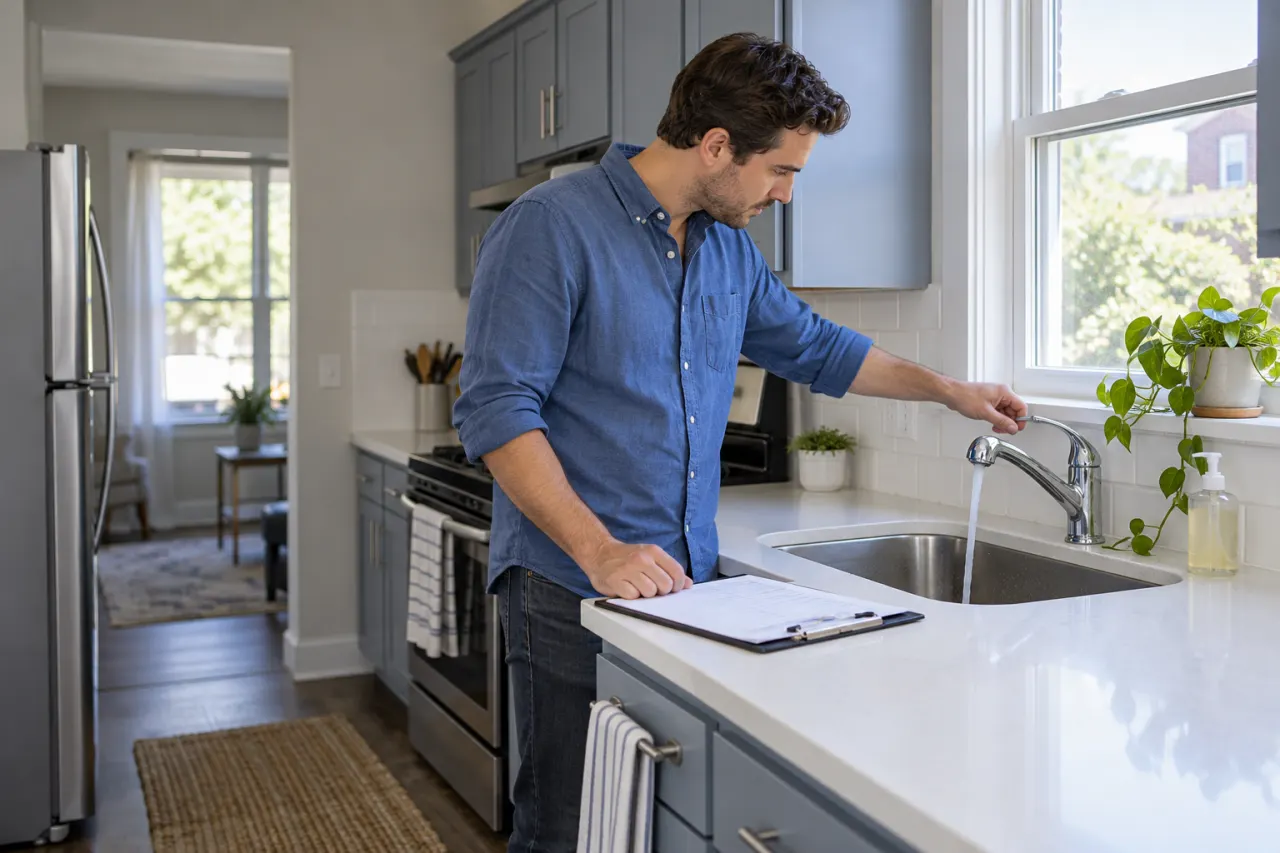
With permission, run the kitchen faucet, bathroom faucet, and shower. Check whether flow is usable, hot water arrives, drains empty steadily, and fittings leak. Ask before running fixtures together to see whether pressure changes during ordinary use.
Flush the toilet and watch whether it refills normally or continues running. Look for water around the base and drips beneath accessible sinks. Avoid touching suspicious water or dismantling anything. A slow drain or weak shower can have several causes; record the symptom and ask who will investigate it.
Find out whether hot water is shared or supplied by a unit-specific heater, who pays for it, and how outages are reported. Ask whether any unusual delay or temperature fluctuation is typical. If utilities are disconnected, arrange another check rather than marking everything as working simply because it looks clean.
4. Test the appliances that are included
Confirm the inventory first. A refrigerator, washer, or microwave visible during a viewing may belong to the current occupant. Ask which appliances come with the lease and who maintains each one.
Where included and practical, check the refrigerator and freezer, stove, oven, dishwasher, microwave, garbage disposal, washer, dryer, heating, and air conditioning. Ask management to demonstrate equipment you do not know how to operate. Never put a hand into a disposal or run unfamiliar equipment unsupervised.
Look for leaks, damaged seals, excessive noise, warning displays, or an unusually dirty filter area. A quick viewing cannot verify a full wash cycle or seasonal heating performance. Ask for a working demonstration, maintenance information, or a follow-up visit when necessary. Record anything untested and confirm how repairs or replacements would be requested, including after-hours emergencies.
5. Check doors, windows, locks, and access
Open and close the main entry door, patio or balcony doors, and accessible windows. Confirm they close fully and lock securely. Look at door frames, loose hardware, damaged glass, and windows that appear painted shut. Ask management about any opening you cannot operate safely.
Check how visitors enter the building and whether communal doors latch behind residents. Ask how keys or access codes are handled between tenancies, how lost keys are managed, and whom to contact if building access fails. No particular lock guarantees safety; functioning hardware and sensible access procedures both matter.
Notice lighting along the route from the entrance or parking area to the apartment. Ask about smoke and carbon-monoxide alarms where fitted, their maintenance process, and the building's emergency instructions. Do not disable alarms or assume a brief viewing confirms compliance with local requirements.
6. Check lighting and accessible outlets
Try light switches and built-in lights. With permission, use a small plug-in device to check accessible, undamaged outlets. This only confirms basic operation; it is not an electrical inspection.
Look for broken outlet covers, exposed wiring, flickering lights, scorch marks, or a burning smell. Stop using anything suspicious and notify management. Do not remove covers, open electrical panels, reset unfamiliar equipment, or attempt repairs. Serious concerns should be assessed by a qualified professional.
Think about practical placement too. Can you use your desk, bedside light, and kitchen equipment without trailing cords across walking routes? Ask whether nonworking lights need bulbs or repairs, and document the answer. Check the location of internet connections if you work or study at home; available service and installation arrangements can affect both convenience and cost.
7. Listen for noise at realistic times
Stand quietly in the bedroom and living room, ideally with windows both open and closed. Listen for traffic, neighbors, elevators, ventilation equipment, restaurants, bars, construction, and activity in parking areas. Notice whether the bedroom shares a wall with a lift shaft or busy communal room.
If possible, revisit during rush hour or in the evening. An apartment can feel quite different after nearby businesses open or residents return home. Ask about planned construction and ordinary quiet-hour procedures, while recognizing that nobody can promise permanent silence.
Match the observations to your routine. A daytime sleeper or remote worker may have different needs from someone away all day. Ask permission before recording audio, and avoid filming neighbors or private spaces. Your own observations are more useful than a general assurance that the building is “usually quiet.”
8. Confirm parking, transportation, and the neighborhood
Ask whether parking is included, reserved, assigned separately, or subject to availability. Check garage charges, visitor rules, permit requirements, and restrictions that could affect your vehicle. Walk the actual route from the space or transit stop to the building.
Test the commute at a realistic time where possible. Consider public transportation frequency, walking access, grocery stores, pharmacies, parks, services, and schools if relevant. Check traffic and practical access rather than relying only on a map's distance estimate.
Cheap rent can become less attractive when fuel, transit fares, parking, or travel time increase substantially. For local comparisons, Best Neighborhoods to Rent in Houston on a Budget and Best Houston Neighborhoods for Families can help you frame the questions. Visit the specific block and building before deciding.
9. Calculate every fee and the total housing cost
Ask for a written breakdown for the exact unit and lease length. Separate money needed before move-in from recurring bills. Confirm which charges are mandatory, optional, refundable, or dependent on usage; do not assume a fee's name tells you its terms.
Your questions to ask before renting should cover:
- Application, administrative, and holding fees, including what happens if you do not proceed.
- Security deposit and any conditions affecting the quoted amount.
- Parking, storage, and amenity charges.
- Pet fees and recurring pet rent, if applicable.
- Trash, water, sewer, pest control, and other service charges.
- Required internet packages or bundled services.
- Electricity, gas, utility setup charges, and the utility-billing method.
Ask whether utilities are individually metered, allocated through a building formula, or billed at a fixed rate. Request available billing information for the unit, while recognizing previous usage does not predict your exact bill. Check whether advertised concessions expire and what the normal payment becomes afterward.
Compare total monthly housing cost, not just advertised rent. Add recurring compulsory charges and realistic utility and transportation estimates. Keep one-time moving and setup costs separate so they do not disappear from your budget. How Much Does It Cost to Rent an Apartment in Houston? provides a fuller framework for local cost comparisons.
10. Read the lease before signing
Request time to read the complete lease and its attachments. Check rent, deposit, duration, renewal terms, late fees, guest and pet rules, utility responsibility, maintenance procedures, move-out conditions, and early termination provisions. Match the documents against the unit, parking arrangement, and written promises discussed at the viewing.
Ask about anything unclear before signing or paying. Who handles urgent repairs? How are ordinary requests submitted and tracked? What notice does management expect for renewal or moving out? This rental inspection checklist helps you identify questions; it does not interpret the legal effect of your lease. Obtain locally qualified advice when you need it.
Verify the address and the person or company managing the property. Independently confirm contact information and authority to rent the unit. Avoid sending money before reasonable verification, and be cautious about pressure to pay immediately. Read How to Avoid Rental Deposit Scams; if an advertisement seems suspicious, follow How to Report a Suspicious Listing.
Document existing damage before moving in
Take dated photos or videos, with permission, of scratches, stains, chips, damaged fixtures, and missing items before your belongings obscure them. Keep wide views that identify the room as well as close-ups. Store copies somewhere you can find later.
Follow the property's official move-in inspection process and submission deadlines. Submit your written observations, keep an acknowledgment where available, and distinguish existing damage from repairs promised but unfinished. Documentation can help resolve future disagreements; it does not guarantee a particular outcome.
Your 10-point apartment viewing checklist
- Inspect walls, floors, doors, and windows.
- Check for moisture or water damage.
- Test faucets, shower, drains, and toilet.
- Test included appliances.
- Check locks and windows.
- Test lights and accessible outlets.
- Evaluate noise.
- Confirm parking and transportation.
- Calculate all fees and total monthly cost.
- Review lease terms before signing.
For a first apartment checklist, add a reminder to photograph existing damage and complete the official move-in report. Keep unanswered questions visible until you receive a satisfactory explanation.
Choose with the full picture
A good apartment is more than one that looks attractive online. Check condition, total cost, lease terms, location, and maintenance details before you commit. An extra viewing or a written answer now can be more useful than trying to resolve uncertainty after moving.
Browse rental listings on DealsNonStop and compare location, price, property type, amenities, and seller information before arranging a viewing.